
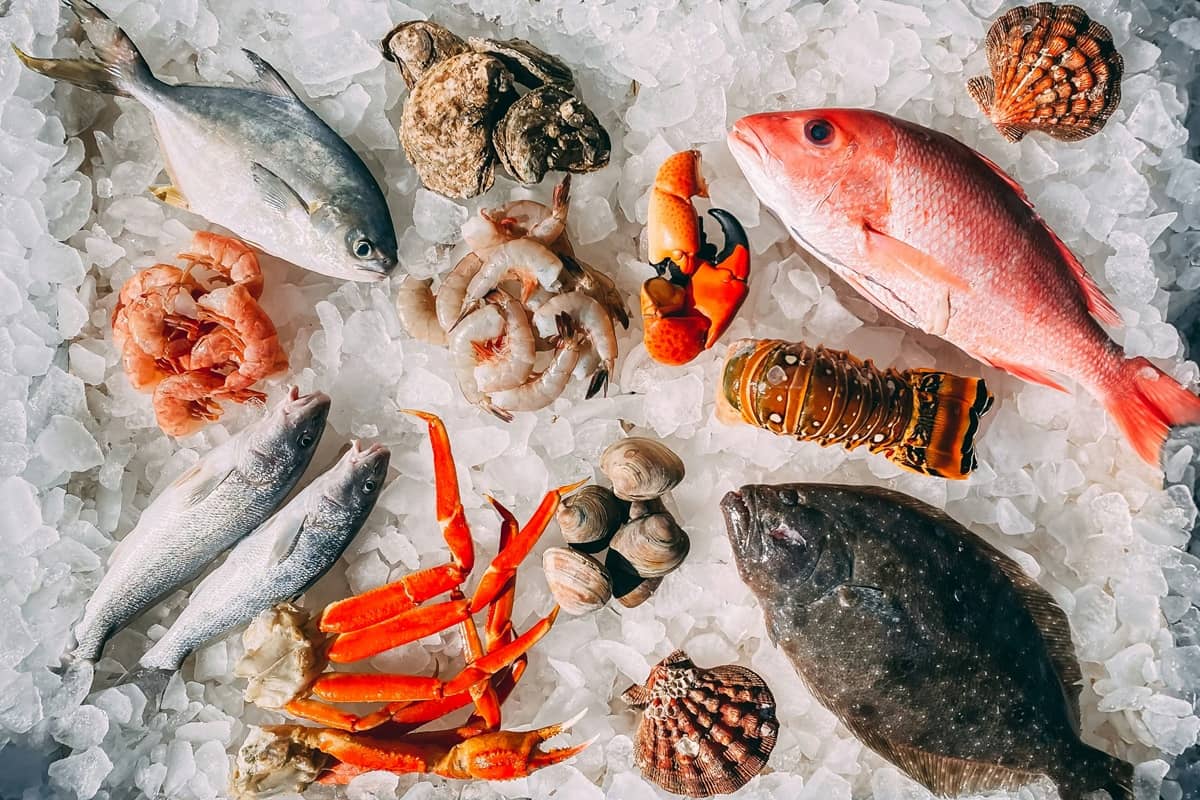
Singapore gets most of its seafood from overseas, supported by a diverse network of suppliers across Asia and other major seafood-producing regions.
In 2025, Malaysia, Indonesia and Vietnam were Singapore’s three largest seafood suppliers, accounting for approximately 13.1%, 11.4% and 10.3% of seafood import value respectively. Other important sources include China, Japan and Norway.
Singapore also produces seafood locally through sea-based and land-based aquaculture farms, although imported seafood continues to make up the large majority of supply.
Where Does Singapore Import Seafood From?
Singapore imports seafood from countries around the world, giving consumers and businesses access to a wide variety of fish, shellfish and other seafood throughout the year.
Malaysia
Malaysia was Singapore’s largest seafood supplier in 2025, accounting for approximately 13.1% of total seafood import value.
Its proximity to Singapore makes it an important source of fresh and chilled seafood, particularly fish and crustaceans.
Indonesia
Indonesia was Singapore’s second-largest seafood supplier, contributing about 11.4% of seafood import value in 2025.
Singapore imports a range of seafood from Indonesia, including fresh and chilled fish and crustaceans.
Vietnam
Vietnam became Singapore’s third-largest seafood supplier in 2025, accounting for around 10.3% of total seafood import value.
Vietnam is particularly important for chilled and frozen fish fillets, fish meat and crustaceans supplied to the Singapore market.
Where Else Does Singapore Get Its Seafood From?
Beyond Southeast Asia, Singapore imports seafood from major producers including Norway, China and Japan.
Norway is an important source of fresh and chilled fish. In 2025, it accounted for approximately 42.5% of Singapore’s imports within the fresh and chilled fish category, excluding fish fillets and fish meat.
China is a major supplier of crustaceans and molluscs, while Japan supplies a wide variety of seafood, including frozen fish and molluscs.
This global sourcing network gives Singapore access to seafood ranging from everyday fish and prawns to premium products such as salmon, scallops, oysters, lobsters and other speciality seafood.
How Does Seafood Enter Singapore?
Imported seafood reaches Singapore through sea, land and air freight, depending on its origin, freshness requirements and product type.
Fresh seafood from nearby countries can be transported relatively quickly, while frozen seafood can be shipped over longer distances from suppliers around the world. Premium live seafood and highly perishable products may also be transported by air.
The Jurong Fishery Port remains an important seafood distribution hub. The Singapore Food Agency describes it as a central point for receiving and distributing imported seafood, with facilities for fishing vessels, wholesalers and seafood merchants.
Does Singapore Produce Its Own Seafood?
Yes. Singapore has both sea-based and land-based aquaculture farms producing seafood locally.
According to Singapore Food Agency statistics, local seafood production represented approximately 6.1% of total live and chilled seafood consumption in 2024. Seafood production increased slightly again in 2025.
Local farms produce species such as:
- Barramundi or Asian seabass
- Red snapper
- Milkfish
- Grey mullet
- Golden pomfret
- Grouper
- Tilapia
For example, Singapore’s The Fish Farmer produces grey mullet, milkfish, red snapper, barramundi and sea perch from its farms around Lim Chu Kang and Changi.
Why Does Singapore Import So Much Seafood?
Singapore has limited land and sea space available for large-scale food production. As a result, imports remain essential to meeting the country’s food requirements.
Singapore imports more than 90% of its overall food supply, making diversification of food sources an important part of national food resilience. In 2025, Singapore sourced food from more than 180 countries and regions.
Under the Singapore Food Story 2, Singapore is strengthening food resilience through diversified imports, global partnerships, stockpiling and increased local production.
By 2035, Singapore aims for local farms to have the capability and capacity to supply 30% of the country’s consumption of protein from eggs and seafood. This replaces the earlier “30 by 30” approach with more targeted local production goals.
Frequently Asked Questions
Where does Singapore get most of its seafood from?
Singapore imports seafood from countries around the world. In 2025, Malaysia, Indonesia and Vietnam were its three largest seafood suppliers, followed by other major sources including China, Japan and Norway.
Which country supplies the most seafood to Singapore?
Malaysia was Singapore’s largest seafood supplier in 2025, accounting for approximately 13.1% of total seafood import value.
Does Singapore import most of its seafood?
Yes. Singapore relies heavily on imported seafood. Local seafood production accounted for approximately 6.1% of live and chilled seafood consumption in 2024, although local seafood production increased slightly in 2025.
What seafood is produced in Singapore?
Singapore’s aquaculture farms produce seafood including barramundi, red snapper, milkfish, grey mullet, golden pomfret, grouper and tilapia.